Implementing the climate agenda in metropolitan areas
CLI-MET is an Erasmus+ cooperation partnership dedicated to advancing climate resilience in European metropolitan regions. The project builds bridges between universities, metropolitan authorities, and international networks to co-create knowledge, share adaptation strategies, and develop innovative training programmes. Through education, stakeholder engagement, and cross-border collaboration, CLI-MET supports cities in addressing climate challenges such as heatwaves, flooding, land degradation, and ecological vulnerability.
Project Description
CLI-MET is an Erasmus+ project designed to assist metropolitan regions in developing, testing, and implementing climate adaptation strategies. The project brings together universities, metropolitan cities, and international networks to support knowledge exchange and capacity-building, ensuring that local authorities and future professionals can respond effectively to emerging climate risks.
The project recognises that metropolitan areas face increasing pressures from climate change, such as heatwaves, extreme rainfall, sea-level rise, and social vulnerabilities. To address these challenges, CLI-MET creates a shared educational framework that integrates scientific methods, practical tools, and participatory approaches. This collaborative process strengthens the ability of metropolitan regions to plan resilient futures.
Main Objectives
- Build a transnational educational programme on climate resilience.
- Strengthen the capacity of metropolitan authorities to design adaptation measures.
- Promote cooperative learning between academic institutions and city governments.
- Organise international training programmes for students and professionals.
- Develop a Digital Academy as an open platform for resilience-related resources.
- Facilitate stakeholder workshops to co-produce knowledge and solutions.
- Support the integration of climate adaptation strategies into metropolitan governance.
Activities
International Intensive Programmes
The International Intensive Programmes are the core educational activities of CLI-MET. These week-long training events bring together students, researchers, metropolitan planners, and experts from across Europe.
- IIP 1 Edition Palermo (IT), hosted by UNIPA in 2026
- IIP 2 Edition Dortmund (DE), hosted by TUDO in 2027
- IIP 3 Edition Madrid (ES), hosted by UPM in 2028
Workshops with Stakeholders
CLI-MET organises stakeholder workshops in each partner city with local administrations, NGOs, professionals, and citizens.
Workshop Goals:
- Co-design local climate adaptation strategies
- Identify vulnerabilities and opportunities
- Build a shared understanding of climate risks
- Foster democratic and participatory approaches
- Strengthen local governance and decision-making
The first Workshop will be held in Izmir (Turkey) on 28-30 September 2026. More information is available on the project website
Digital Academy The CLI-MET Digital Academy is the project’s online platform hosting: training modules lecture recordings scientific materials urban climate analyses workshop outcomes student projects policy tools and guidelines interactive resources The Academy will grow throughout the project and remain accessible as a long-term educational resource for both students and metropolitan authorities.
Partners
University of Palermo (UNIPA) – Italy as Lead partner
UNIPA is a major academic institution in Southern Italy, with a long tradition of research on urban studies, territorial planning, and environmental transformation. With over 40,000 students, UNIPA plays a leading role in studying climate adaptation challenges in the Mediterranean region. The Department of Architecture contributes expertise in metropolitan governance, resilience planning, socio-territorial analysis, and climate-sensitive design. UNIPA coordinates CLI-MET, ensuring scientific quality, transnational collaboration, and the development of educational tools for climate resilience.
Universidad Politécnica de Madrid (UPM) – Spain
UPM is among the most prestigious technical universities in Spain, with a strong international reputation in engineering, architecture, and environmental sciences. The university hosts a broad range of research groups specialised in climate risk assessment, urban adaptation, GIS-based analysis, and sustainable territorial planning. UPM enriches CLI-MET with scientific expertise, advanced methodologies, and an interdisciplinary approach to climate resilience education.
TU Dortmund University – Germany
TU Dortmund is one of the leading centres for spatial planning research in Europe. With around 35,000 students, the university integrates planning, engineering, and environmental science in an interdisciplinary framework. The School of Spatial Planning has extensive experience in climate adaptation, land-use policies, regional development, and governance models. Within CLI-MET, TU Dortmund contributes methodological innovation and supports transnational learning between metropolitan regions.
Izmir Metropolitan Municipality – Turkey
Izmir is Türkiye’s third-largest metropolitan area, home to approximately 4.5 million residents. Located on the Aegean coast, the city faces significant climate-related challenges, including heatwaves, coastal risks, drought, and rapid urbanisation. The Metropolitan Municipality leads ambitious climate adaptation and mitigation programmes, including green mobility strategies, nature-based solutions, and urban transformation projects. Their participation in CLI-MET brings a practical perspective on managing resilience in a large and dynamic metropolitan context and creates opportunities for student mobility and international cooperation.
Metropolitan City of Milan – Italy
The Metropolitan City of Milan encompasses 133 municipalities and more than 3 million inhabitants, forming one of Europe’s most dynamic economic regions. Beyond its global reputation, the territory faces complex climate challenges: heat vulnerability, urban sprawl, hydrological risks, and ecological fragmentation. The metropolitan authority leads important initiatives on climate adaptation planning, territorial governance, and sustainable urban development. Through CLI-MET, Milan contributes real-world case studies and offers insights into adaptation strategies for large, urbanised regions.
METREX – Network of European Metropolitan Regions and Areas
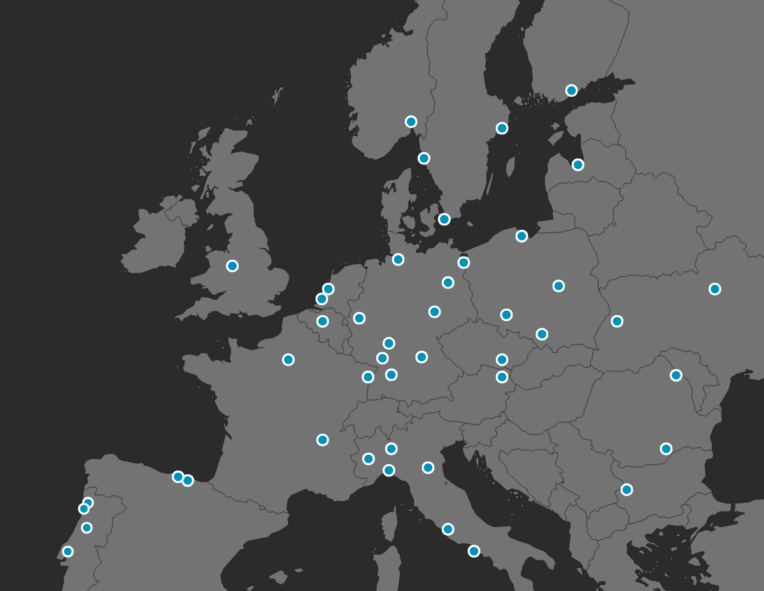
METREX is an international network connecting more than 50 metropolitan regions and major cities across Europe. The organisation facilitates knowledge exchange, joint strategies, and policy learning on issues related to metropolitan governance, sustainability, climate resilience, and territorial cohesion. In CLI-MET, METREX ensures European visibility, supports dissemination of project outputs, and connects the partnership to a wider community of metropolitan practitioners.
More info
To know more, please visit the website: https://www.cli-met.eu/