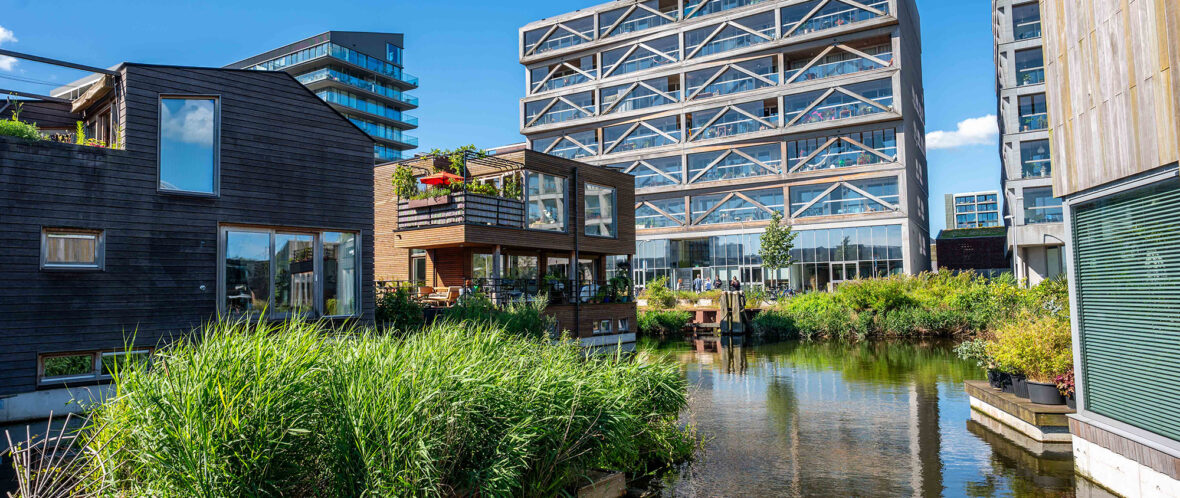
Cover photo: copyright Fabio Bayro Kaiser
Spatial Implications of the (Circular) Economy or Spatial Planning for the Circular Economy
This thematic working group addresses the spatial implications of the (circular) economy in cities and metropolitan regions, with a strong focus on policy development, spatial planning instruments, and design practice. As urban economies transition from linear to circular models, this shift requires new approaches to land use, zoning, infrastructure planning, and urban design across multiple spatial scales.
Building on the results of the METREX Interreg project ASSET, the working group uses its insights, methods, and case studies as a shared foundation. ASSET provides a valuable evidence base on how circular economic activities translate into spatial requirements and how metropolitan regions can respond through planning and governance. The working group aims to further develop and apply these results in concrete policy and design contexts.
Key topics
Key topics include the integration of circular economy objectives into regional and local planning frameworks, the adaptation of regulatory instruments (such as zoning plans, environmental regulations, and development guidelines), and the role of urban and architectural design in accommodating circular production, logistics, reuse, repair, and recycling activities. Particular attention is paid to implementation challenges, cross-sectoral coordination, and the alignment of economic, spatial, and environmental policies.
By bringing together policymakers, spatial planners, designers, researchers, and practitioners, the working group functions as a platform for applied knowledge exchange. It supports the translation of circular economy ambitions into actionable spatial strategies, planning tools, and design principles that can be embedded in everyday practice.
The ultimate goal of the working group is to strengthen the capacity of cities and metropolitan regions to operationalise the circular economy through coherent spatial policies and well-designed urban environments, contributing to resilient, inclusive, and sustainable regional development.
Chair
Bas Horsting, City of Amsterdam