
As METREX prepares to mark its 30th anniversary in Rome, President Marco Griguolo and Secretary General Peter Ágh reflect on the experiences, relationships and shared ambitions that have shaped the network, and the people who will carry it forward.
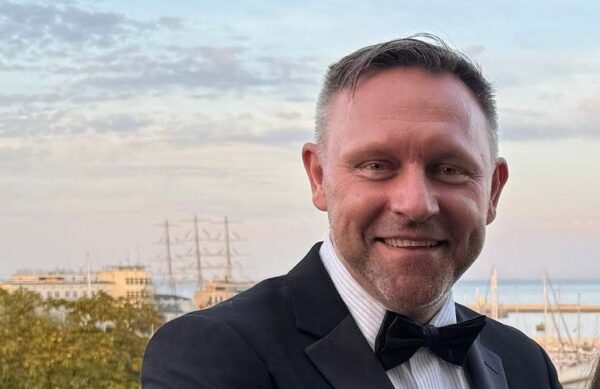
For more than twenty years, Peter Ágh worked in local government in Slovakia, from small villages to the capital, Bratislava. He knows the daily pressures of public administration, and how difficult it can be to find someone who has already dealt with the problem sitting on your desk.
“In local government you often feel you are solving problems alone,” he recalls. At METREX, he found something different: professionals from across Europe willing to share their experience, including what had gone wrong. “That honesty is rare, and it is built on trust.”
It is a quality that has helped sustain METREX since its establishment in 1996. Over three decades, the network has brought together metropolitan authorities, planners, elected representatives and other professionals working across different countries and institutional systems. Some have been involved for much of that time; others are only beginning to discover what membership can offer.
As delegates prepare to gather in Rome from 11 to 13 November for the network’s 30th Anniversary Conference, the occasion offers an opportunity to look at METREX through the experiences of those who work within it.
For Ágh, now METREX Secretary General, the relationships built over the years are as important as the knowledge exchanged. Reading the reflections of long-standing contributors such as Roger Read and Alastair Wyllie, he has been struck by the continuity of a community that remains open to new ideas and perspectives.
“METREX is a professional network, but it often feels like a community of colleagues who have become friends.”
Learning from one another
The benefits of these relationships are particularly evident when members face problems that cannot be solved within the boundaries of a single municipality.
Housing, mobility, climate adaptation and the management of urban and rural areas are familiar concerns across Europe. Yet the institutions responsible for addressing them differ considerably, as do their legal powers, resources and political circumstances.
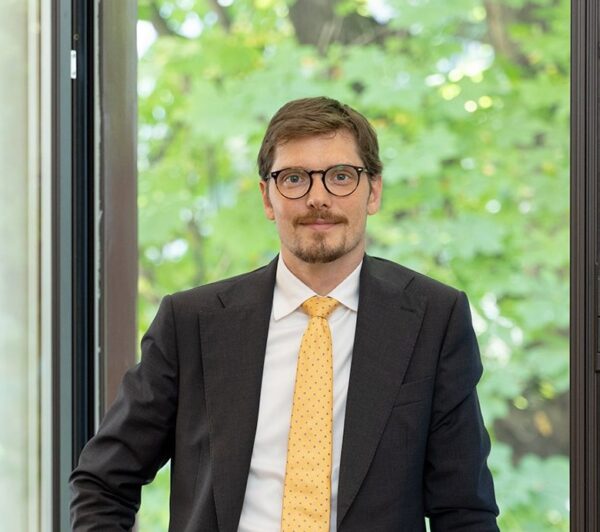
For METREX President Marco Griguolo, comparing these different experiences has changed the way he approaches metropolitan governance.
“Comparing experiences with other metropolitan areas has taught me to look beyond the formal allocation of responsibilities and ask how we can build shared decision-making processes.”
His work in the Metropolitan City of Milan offers a practical example. Developing cycling infrastructure is not simply a matter of building new routes. Connecting a cycle path to public transport requires decisions about infrastructure, planning and services to be coordinated across several authorities. The success of an individual intervention depends on how well it fits into the wider transport system and the needs of the surrounding communities.
Similar questions arise in metropolitan areas with very different institutional arrangements. Some have directly elected authorities; others depend on voluntary cooperation between municipalities. Through METREX, members can examine how colleagues elsewhere have negotiated agreements, coordinated investments or dealt with difficulties, without assuming that a solution developed in one place can simply be replicated in another.
The network’s conferences play a particular role in this exchange. Hosted by member regions, they give participants an opportunity to see projects and local challenges first-hand, often revealing aspects of an initiative that cannot be fully understood through reports or presentations.
Expert Groups and Metropolitan Labs provide another setting for this work, bringing professionals together around specific policy challenges and creating opportunities to continue discussions beyond individual meetings.
Both Griguolo and Ágh see value in making these exchanges more systematic. Returning to a project after its initial presentation, assessing what has worked and understanding the obstacles encountered can be just as useful as discovering a new practice.
From local experience to European decisions
For Griguolo, the importance of maintaining relationships between territories became especially clear during his recent visit to Lviv, Ukraine.
There, he met local administrators who were discussing the future development of their communities while also having to address immediate questions of safety. The experience reinforced his view that cooperation must continue beyond meetings and declarations of solidarity, through the exchange of expertise and partnerships that can support local authorities in developing and implementing projects.
It also illustrates a wider responsibility that he believes METREX should assume: helping metropolitan territories make their experience count in decisions taken at European level.
Griguolo has called for a stronger role for metropolitan authorities in EU policymaking and funding decisions, including during discussions with European Commissioner Raffaele Fitto. He argues that investment programmes need to reflect the way territories actually function, recognising the connections between housing, employment, transport and environmental systems rather than treating these as separate policy areas.
The preparation of the Rome Declaration is part of this effort. The conference will provide an opportunity for METREX members to contribute to a common position on the metropolitan dimension of future European policies, including the involvement of metropolitan authorities and forms of metropolitan cooperation in the preparation, implementation and monitoring of National and Regional Partnership Plans.
For Ágh, this collective voice is another reason why membership matters. Individual metropolitan areas may find it difficult to influence European discussions on their own. Within METREX, experiences from different territories can inform a shared position, supported by the knowledge of those responsible for putting policies into practice.
Making room for the next generation
Thirty years of cooperation have created a considerable body of expertise and professional relationships. Preserving that experience while welcoming new participants is now one of the network’s challenges.
“A network with thirty years of history can, without meaning to, feel like a circle of people who already know each other,” Ágh acknowledges.
He would like METREX to offer newcomers a more deliberate welcome, whether they represent a new member region or are younger professionals joining colleagues from an established member. Pairing first-time participants with experienced members, involving them early in Expert Groups and Metropolitan Labs, and giving them opportunities to present their own work are among the ideas he hopes to develop.
His years in local government have also shaped his understanding of participation. People are more likely to remain involved when they feel their knowledge and contribution are valued, rather than seeing membership only as a service they receive.
Griguolo shares this emphasis on participation, but also wants the outcomes of METREX’s activities to become more visible within members’ administrations. An improved planning decision, a new partnership or expertise brought back to a local team should be recognisable results of belonging to the network.
He hopes the work initiated in Rome will continue through peer-to-peer exchanges, shared tools and regular reviews of progress. Strengthening cooperation with Ukrainian metropolitan areas, particularly in support of reconstruction and European integration, is another priority.
For both leaders, the anniversary is therefore an occasion to consider not only what METREX has achieved, but how the network can remain useful to the people who will join it in the coming years.
In Rome, many participants will be meeting for the first time. Others will be renewing relationships that began years or even decades ago. Ágh has a simple way of judging whether those encounters have been worthwhile:
“If someone leaves their first METREX conference with two or three colleagues they can call afterwards, the network is doing its job.”