Thirty years is long enough for a network to change substantially. Looking back at METREX through the decades shows how its membership, working methods and role in European metropolitan cooperation have developed over time.
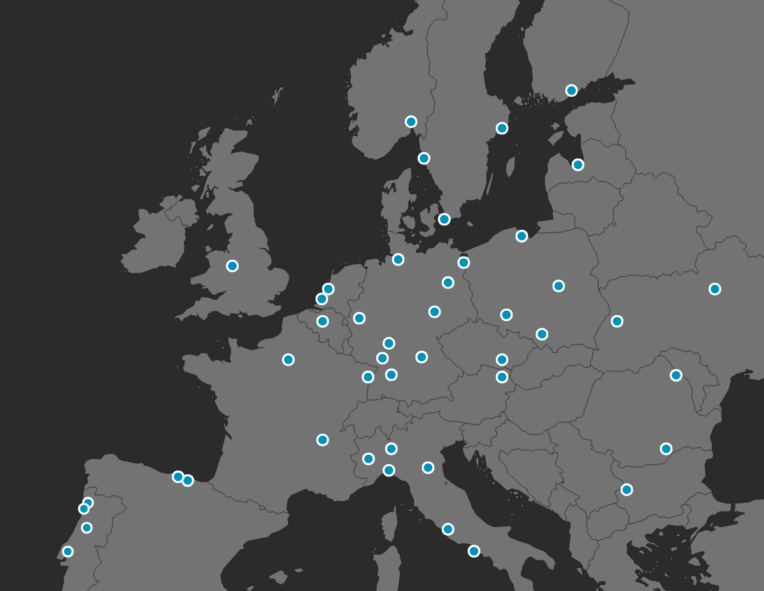
Since 1996, METREX has grown from a relatively small group of metropolitan authorities into a network bringing together more than 50 regions and areas across Europe.
That development was not driven by a single process. It took shape through changes in leadership, the creation of new forms of collaboration, European projects, Expert and Network Groups, and a progressively stronger engagement with European policy and research.
Three decades provide a useful way of tracing that evolution.
1996–2006 | Building the network and its first tools for cooperation
The first decade was largely about consolidation: expanding the network, establishing common ground and creating ways for members to work together beyond the regular conferences.
METREX began with 15 founding authorities. By 2001, membership had reached 34, doubling in the space of five years. This brought a wider range of planning traditions, institutional arrangements and metropolitan experiences into the network.
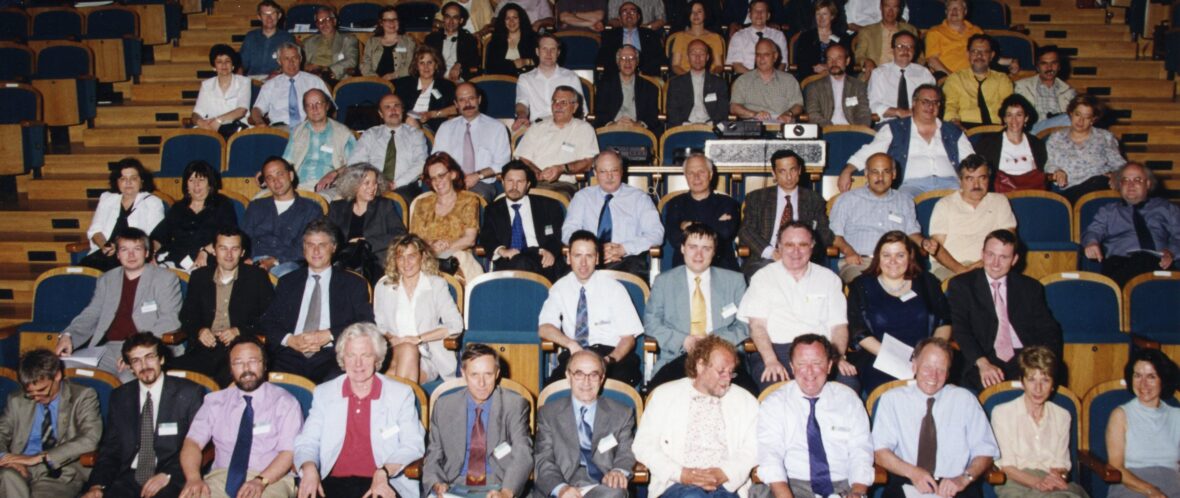
An early milestone came with the Porto Convocation in 1999, which brought together 40 representatives of metropolitan regions and areas and resulted in the Porto Metropolitan Magna Carta, a Declaration of Intent and a related Practice Benchmark. These documents set out shared ambitions around effective metropolitan planning, the exchange of knowledge and practice, and the contribution of a metropolitan perspective to European spatial development.
In 2000, Mercedes Bresso, then President of the Province of Turin, became President of METREX. The meeting held in Turin that year also developed the initial PolyMETREX concept, extending the network’s perspective beyond individual metropolitan regions towards the larger corridors and relationships connecting European territories.
This approach was taken further through InterMETREXplus and PolyMETREXplus. The projects brought metropolitan areas together in structured programmes of comparison, workshops and joint work on metropolitan planning practice and polycentric territorial development. Expert Groups were also becoming established as a way for members to work in greater depth on specific issues.
By the middle of the decade, METREX was also making a more explicit connection between metropolitan practice and European policy. At the 2004 Barcelona meeting, under the incoming presidency of Bernd Steinacher, the network adopted From Cities to Metropolitan Regions: the need for an enlarged perspective, a position paper addressing the future of the Structural Funds.
By the end of its first ten years, METREX had therefore developed several of the working methods that would remain important to the network: peer exchange, thematic cooperation, joint projects and the development of common perspectives on metropolitan issues.
2006–2016 | Broadening the agenda and strengthening the metropolitan dimension
During its second decade, METREX broadened both the issues it addressed and the scale of its cooperation.
Climate change, energy and environmental transition became increasingly prominent. EUCO2 80/50, involving 15 METREX members and the University of Manchester, used the GRIP model to explore greenhouse-gas emissions and possible reduction pathways. It was one example of how metropolitan spatial planning was becoming more closely connected with environmental, economic and energy questions.
The network also developed a wider international dimension, building exchanges with metropolitan regions and organisations beyond Europe. At the same time, its Expert Groups expanded the range of subjects being examined collectively, including governance, economic development, infrastructure, housing, transport and metropolitan futures.
Changes were taking place within the organisation itself. In 2010, during the presidency of Hannu Penttilä, the governance structure was reformed. The Managing Committee, which had previously included all members, became an elected body composed of the President, two Vice-Presidents and other elected representatives. This created a more defined governance structure for a network that had become considerably larger and more complex.
The relationship between metropolitan practice and European policy also became more explicit. In 2013, METREX published The Metropolitan Dimension to European Affairs. The following year, during the Brussels Conference, the network adopted a Position Statement on the Metropolitan Dimension, setting out the case for metropolitan regions and areas to be more clearly recognised within European policy and territorial development.
This period also included a significant transition in leadership. Nicola Schelling became President in 2014, while in 2016 Roger Read, who had served as Secretary General since METREX was founded, handed over to Henk Bouwman.
The handover coincided with METREX’s twentieth anniversary. By then, the network had organised around 40 conferences and accumulated a substantial body of practitioner knowledge through presentations, projects and collaborative work.
Together with the professional relationships created through them, these activities contributed to the network’s growing social capital.
2016–2026 | Building capacity and a stronger European role
The third decade opened with a new phase in the organisation of the network.
Henk Bouwman served as Secretary General from 2016 to 2025. During these nine years, the network strengthened and professionalised its operations and increased its capacity to participate in European projects and research.
A significant step came in 2018, when the General Assembly approved the METREX Strategy and Action Plan 2018–2023 under the heading Continuously Exploring the Metropolitan Dimension. The strategy set out several priorities: stronger links with European institutions and networks; greater participation in European projects; closer engagement with research institutes and academia; improved exchange between members; and a more active presence in European policy discussions.
Expert and Network Groups remained an important part of this model. In 2018, activities included Metropolitan Governance, EconoMETREX and the Nordic network, while the new SURE network brought together cities and regions in the wider Rhine and Scheldt delta. Membership was also growing, alongside increasing cooperation with other European networks.
The connection between research and metropolitan practice also became more structured. METREX began developing a Research Portal to improve the link between scientific knowledge and the practical needs of metropolitan regions. In 2023, this direction was reinforced when METREX joined the European Urban Research Association (EURA), creating a formal framework for exchanges between researchers and practitioners and for collaboration on European projects.
The network’s engagement with European policy developed in parallel. METREX contributed to the consultation process for the New Leipzig Charter, with members providing input on the role of metropolitan regions and areas in sustainable urban development.
In 2021, Jakub Mazur became President of METREX. The same period saw the adoption of a new Mission Statement, which described metropolitan regions and areas as Living Labs: places where change can be observed, approaches tested and experience shared across territories.
This direction became particularly visible in 2023, with the launch of the Manifesto for Metropolitan Partnerships at the European Parliament. The Manifesto brought together seven proposals aimed at strengthening the recognition of metropolitan regions and areas within European programmes, institutions and decision-making.
The work continued through the 2024 Spring Conference in Brussels, Forging a Metropolitan Europe, the subsequent meeting in Bucharest and the 2025 Spring Conference in Gdańsk-Gdynia-Sopot, Towards a European Metropolitan Agenda. Together, these meetings developed a more sustained discussion around the contribution metropolitan areas can make to European policy and around the case for a clearer European Metropolitan Agenda.
A further transition came in 2025. Marco Griguolo, Councillor of the Metropolitan City of Milan, became President of METREX, while Peter Ágh succeeded Henk Bouwman as Secretary General.
Looking ahead: the next thirty years
Thirty years after its foundation, METREX now brings together more than 50 metropolitan regions and areas. The network combines conferences and peer exchange with Expert and Network Groups, European projects, research partnerships and policy initiatives.
Across the three decades, the direction of travel is clear. METREX first built a European community of metropolitan practitioners, then developed more structured forms of cooperation and shared work, and progressively strengthened its capacity to connect metropolitan experience with European research and policy.
The individual milestones differ, but together they describe a network that has continued to adapt its tools and priorities while maintaining cooperation between metropolitan regions and areas at the centre of its work.