
Europe’s competitiveness cannot be addressed solely as an economic or industrial challenge. It is also a territorial one. A new White Paper developed within EconoMETREX explores why metropolitan areas should play a stronger role in shaping and delivering Europe’s competitiveness agenda.
Europe’s competitiveness has returned to the centre of the European policy debate. Closing the innovation gap, accelerating decarbonisation and reducing strategic dependencies are now among the EU’s key priorities.
But there is another question behind this debate: where does Europe’s economic transformation actually take place?
Metropolitan areas bring together many of the factors that determine Europe’s capacity to compete and innovate: businesses and industry, universities and research centres, talent and skills, mobility and infrastructure, investment, energy and quality of life. They are also where many of the transitions Europe is pursuing ultimately have to be coordinated and delivered.
Yet this metropolitan dimension receives comparatively little attention. While the Draghi Report and the Competitiveness Compass provide a broad framework for strengthening Europe’s economic performance, much less attention is given to the role metropolitan areas can play in enabling and delivering this transformation.
This is the starting point of the latest version of the White Paper on Enhancing the Competitiveness and Dynamism of EU Metropolitan Areas, developed within the EconoMETREX Expert Group.
From beneficiaries to strategic partners
The White Paper argues for stronger recognition of metropolitan areas not simply as places where European policies are implemented, but as strategic partners in Europe’s competitiveness agenda.
There is a practical reason for this. Metropolitan authorities already work across many of the policy areas that shape competitiveness, from territorial planning and sustainable mobility to investment, clean industries, research and innovation, social infrastructure and quality of life.
Their economic weight is equally relevant. Drawing on the Common Metropolitan Vision developed through the MECOG-CE project, the White Paper highlights that metropolitan regions and areas are home to around 60% of the EU population and generate around 70% of its GDP.
Strengthening Europe’s competitiveness therefore also means asking whether metropolitan areas have the governance capacity, resources and recognition needed to play this role.
A mission-oriented approach
Building on this premise, the White Paper develops a clearer mission-oriented approach to metropolitan competitiveness.
Rather than focusing on isolated projects, this approach would bring metropolitan areas together with EU institutions, Member States, cities and regions, universities and research centres, businesses and civil society around shared objectives and coordinated investment.
It also recognises that metropolitan areas do not all need to compete for the same role. Different territories have different economic, technological and research strengths. Connecting these specialisations could allow metropolitan areas to strengthen their own competitiveness while contributing to wider European value chains.
The White Paper also explores how this approach could connect with the next generation of European policies and funding. Its proposals introduce a more operational dimension to the discussion, looking at governance and implementation in the context of the future EU Multiannual Financial Framework.
The broader point goes beyond funding: metropolitan areas need the capacity to contribute to the design, implementation and delivery of the policies that affect their territories.
Competitiveness beyond economic growth
This broader understanding is reflected in five challenges explored by the White Paper.
They range from attracting and retaining talent and improving quality of life to strengthening Europe’s innovation leadership and strategic autonomy; from environmental resilience and resource security to preparedness in a more volatile geopolitical context and better access to capital.
Housing, mobility, skills, artificial intelligence, advanced manufacturing, water resilience, food systems, cyber-resilience and investment may appear to belong to very different policy debates. At metropolitan level, however, they increasingly intersect.
Competitiveness, from this perspective, is about more than economic growth alone. It also depends on the ability of territories to connect governance, innovation, resilience, quality of life and investment around common challenges.
Shaped by metropolitan experience
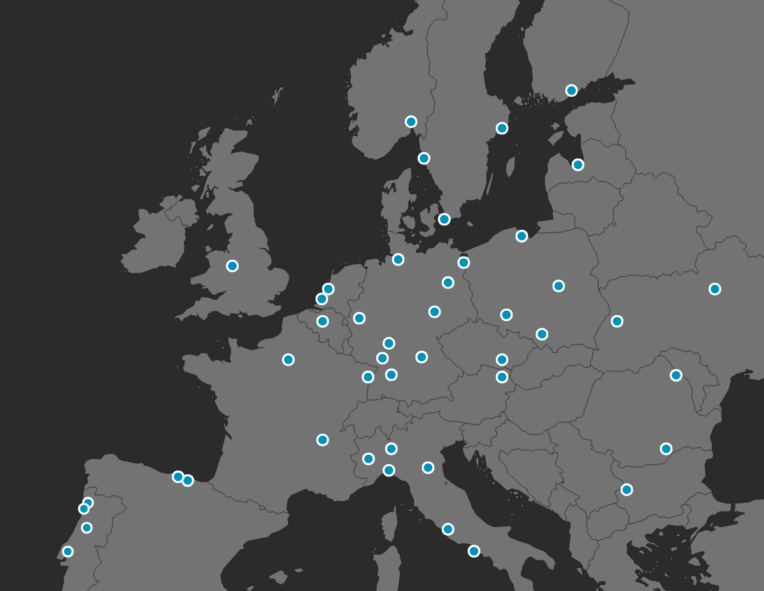
The latest version of the White Paper also reflects contributions from across the METREX network.
Members were invited to contribute through the EconoMETREX White Paper and metropolitan governance questionnaires. Their feedback helped further develop the document, including its approach to circular economy, nature protection, environmental resilience, agriculture and food systems.
The updated version also strengthens connections with the Common Metropolitan Vision and the EU Agenda for Cities, while bringing a more operational perspective to governance and implementation in relation to the future EU Multiannual Financial Framework.
The consultation has therefore helped build a broader knowledge base for discussion within EconoMETREX and the wider network, bringing different metropolitan experiences into a shared reflection on Europe’s competitiveness.
Bringing the metropolitan perspective into the European debate
The White Paper raises a practical question: how can Europe better connect its competitiveness ambitions with the territories expected to deliver them?
That question becomes particularly relevant as the EU looks towards its next policy and investment cycle. The coming years offer an opportunity to strengthen the metropolitan dimension of European governance and investment, while giving metropolitan authorities a greater role in shaping and implementing future programmes.
The updated White Paper now provides a basis for further discussion within METREX and EconoMETREX, and for exploring how the metropolitan perspective can contribute to the wider European debate on competitiveness.
Europe’s competitiveness will depend on innovation, investment and industrial capacity. But it will also depend on whether those ambitions can be connected and delivered across the territories where Europe’s economic transformation actually takes place.