
Digitalisation is transforming the way people live, work, access public services and interact with institutions. It is also changing how businesses operate, how public authorities plan services and how territories compete and cooperate.
However, this transition is not taking place in the same way everywhere. While some European regions benefit from strong digital infrastructure, widespread skills and effective public services, others continue to face gaps in connectivity, capacity and access. These differences can deepen existing inequalities between regions, cities and communities.
DIGIREG – Territorial Perspectives of Digital Transition in European Regions was developed to better understand these territorial differences and explore how digital transition can support more inclusive and balanced development across Europe.
Funded by ESPON, the project brings a territorial perspective to one of the European Union’s main strategic priorities. The Digital Decade Policy Programme 2030 sets common goals for digital infrastructure, skills, businesses and public services. Reaching these goals, however, depends not only on technology, but also on the ability of regions and cities to adapt digital strategies to their own social, economic and institutional context.
Led by the Politecnico di Milano – Department of Architecture and Urban Studies, DIGIREG was carried out by a multidisciplinary consortium involving Deloitte, Progress Consulting S.r.l. and METREX.
The project examined how digitalisation is progressing across European regions and which conditions allow territories to benefit from it. Its findings show that connectivity alone is not enough. Skills, institutional capacity, governance, economic conditions and the ability to design effective public policies all influence the results of digital investment.
This means that there is no single model for digital transition. Strategies that work in one territory may not be equally effective elsewhere. Regional and local authorities therefore need approaches that respond to the specific needs of their communities, businesses and institutions.
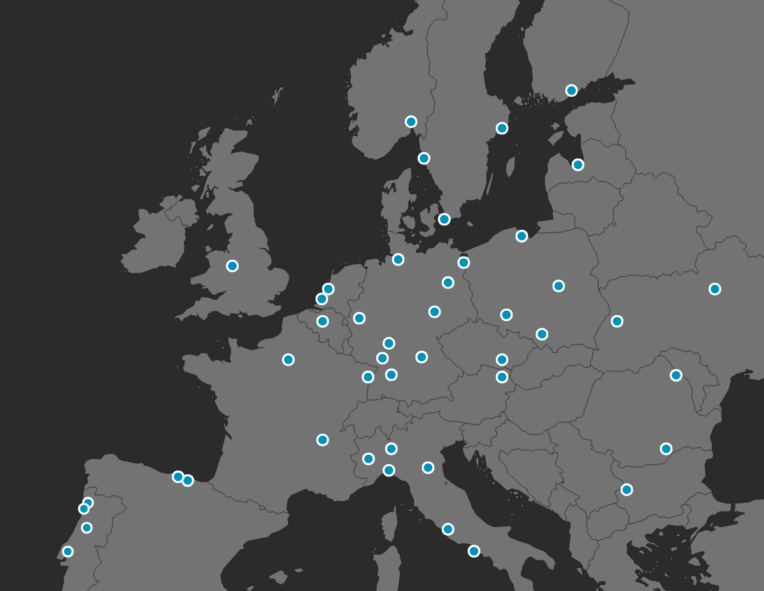
DIGIREG provides evidence and practical examples to support this work. Its outputs include a Digital Cohesion Atlas, regional maps and profiles, policy guidance, interactive Storymaps, 100 Best Policy Practices and 21 showcases presenting initiatives developed in different European territories.
Together, these resources offer a clearer picture of the digital divide and show how public authorities are responding to challenges such as unequal access to services, gaps in digital skills and differences in the ability of institutions and businesses to adopt new technologies.
As a member of the consortium, METREX contributed by bringing the experience of European metropolitan regions and areas into the project.
Working with Progress Consulting, the network supported the collection and development of 30 Best Policy Practices through desk research, an open call, a dedicated webinar and interviews with METREX members and other organisations working on different aspects of the digital divide.
METREX also contributed to the preparation of 10 showcases, documenting practical experiences and speaking directly with those responsible for implementing the selected initiatives. A workshop with interested members also supported the development of guidance for local and regional digital strategies.
This contribution helped connect the research with the practical challenges faced by metropolitan authorities, from improving access to digital public services to strengthening skills, inclusion and institutional capacity.
For metropolitan regions and areas, the findings of DIGIREG are particularly relevant. Digitalisation can improve public services, support economic development and create new opportunities, but it can also reinforce existing inequalities if territorial differences are not taken into account.
The project’s central message is therefore clear: digital transition is not simply a technological process. It is a territorial and social transformation that requires investment, skills, effective institutions and policies designed around the needs of different places.
Thanks to all the partners of the Consortium for this opportunity and for the valuable results.
Read the final report and explore the project’s outputs on the ESPON website: https://www.espon.eu/sites/default/files/2026-07/digireg_final_report.pdf