Through the Interreg Europe Metro Case project, METREX is connecting metropolitan experiences across Europe with the governance challenges faced by project partners. By identifying and mobilizing Good Practices, facilitating exchanges between practitioners and supporting interregional learning, METREX aims to help turn European knowledge into opportunities for policy improvement.
Connecting metropolitan experiences across Europe
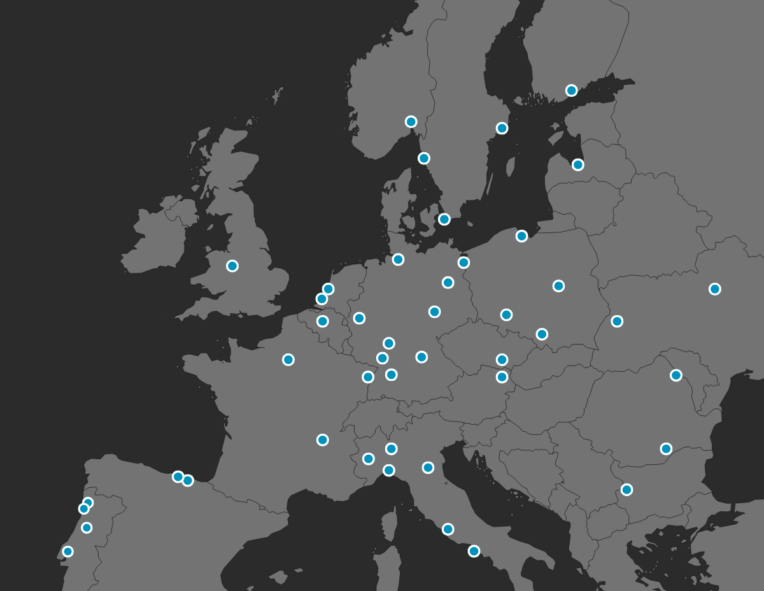
As an Advisory Partner in the Interreg Europe Metro Case project, METREX – the Network of European Metropolitan Regions and Areas – plays a strategic role in connecting the project partnership with a wider European community of metropolitan authorities, practitioners and experts.
Across Europe, metropolitan regions face common challenges: coordinating policies across administrative boundaries, strengthening cooperation between municipalities and different levels of government, managing territorial development and developing more effective institutional and strategic planning arrangements. Yet the approaches adopted to address these challenges vary considerably, reflecting different political, administrative and territorial contexts.
This diversity represents a valuable resource for interregional learning.
METREX’s contribution builds on its capacity to identify relevant metropolitan experiences, bring together institutional knowledge and practical expertise, and connect them with the specific needs of Metro Case partners.
METREX’s distinctive added value lies not simply in the geographical reach of its network, but in its ability to mobilize knowledge and practitioners both within and beyond its membership, making European metropolitan experiences accessible and relevant to concrete policy challenges.
Since the launch of Metro Case in 2025, METREX has progressively developed this role, moving from network mobilization and knowledge exchange towards a more structured contribution to Good Practice identification, peer learning and advisory support.
Eight Good Practices: A European resource for metropolitan policy improvement
One of METREX’s most significant contributions to Metro Case is the identification and development of eight Good Practices representing different approaches to metropolitan governance, territorial cooperation and strategic policy development across Europe.
Working in close coordination with the City of Warsaw and Politecnico di Torino, METREX developed a process combining a Call for Good Practices addressed to its members, targeted desk research, exchanges with metropolitan authorities and interviews with practitioners directly involved in implementing the selected initiatives.
The objective was not simply to collect examples of successful experiences, but to identify approaches that could offer relevant lessons for the governance challenges and policy improvement needs of Metro Case partners.
The eight selected practices reflect different dimensions of metropolitan governance:
Brno – From ITI to Metropolitan Governance in Brno: Building Cooperation through Integrated Investment
The Brno experience explores how Integrated Territorial Investments (ITI) can provide more than a mechanism for coordinating investments, contributing to the development of metropolitan cooperation and shared strategic priorities. It offers insights into how financial and territorial instruments can become catalysts for more structured metropolitan governance.
Copenhagen – Governing Metropolitan Growth Through Long-Term Spatial Rules: The Copenhagen Finger Plan
The Copenhagen Finger Plan demonstrates the role of a long-term spatial planning framework in guiding metropolitan development across municipal boundaries. It provides an opportunity to examine how continuity, clearly established spatial principles and coordination between different levels of government can contribute to managing metropolitan growth over time.
Lyon – A Metropolitan Government Put to the Test: Governing Lyon Through Political Change
The Métropole de Lyon offers a distinctive example of metropolitan institutionalization, where governance arrangements and political responsibilities operate at a metropolitan scale. The practice explores the resilience and adaptability of this model in the face of political change, highlighting the relationship between institutional structures, political dynamics and metropolitan policy implementation.
Milan – From Project to Mindset: Scaling the Metropolitan Sponge City Strategy in Milan
Milan’s Sponge City experience illustrates how climate adaptation can evolve from individual interventions into a broader metropolitan strategy. It explores the governance, organizational and policy conditions needed to scale up nature-based solutions and integrate climate resilience into territorial planning and public investment.
Metropolregion Rheinland – Steering Transformation Without Steering Power: MRR as a Meso-Level Catalyst
The experience of Metropolregion Rheinland (MRR) examines how a metropolitan organization can facilitate cooperation and influence territorial transformation without relying on formal governmental authority. It offers insights into the role of metropolitan networks as intermediaries, conveners and catalysts for shared strategic action across institutions and territories.
Rotterdam – Digital Rotterdam: Open Urban Platform and Citiverse Governance
Rotterdam’s experience explores the governance dimension of digital transformation through open urban platforms, data cooperation and emerging Citiverse approaches – immersive virtual environments, built on the city’s digital twin and urban data, in which administrations, businesses and citizens can explore, test and co-design changes to the city. It raises questions about the institutional arrangements, partnerships and shared frameworks required to make digital tools effective instruments for more integrated metropolitan governance.
Amsterdam Metropolitan Area – Making Green and Blue Grow with the Metropolis: Climate-Resilient Urbanization in the Amsterdam Metropolitan Area
The Amsterdam Metropolitan Area experience examines how metropolitan cooperation can support climate-resilient urbanization by integrating green and blue infrastructure into territorial development. It highlights the importance of coordination between public authorities, shared policy frameworks and common adaptation objectives in addressing climate risks across administrative boundaries.
Gdańsk–Gdynia–Sopot – Building a Metropolitan Institution: The Institutional and Legislative Process
The Gdańsk–Gdynia–Sopot Metropolitan Area experience focuses on metropolitan institutionalization and the legislative processes involved in strengthening metropolitan governance. It provides an opportunity to examine the relationship between intermunicipal cooperation, institutional recognition and the development of legal frameworks capable of supporting metropolitan-level action.
Learning from different pathways to metropolitan governance
Taken together, these eight experiences demonstrate that metropolitan governance is not defined exclusively by the existence of a formal metropolitan authority.
It can emerge through integrated investment instruments, long-term spatial planning frameworks, institutional reform, strategic cooperation, digital platforms, climate adaptation policies and networks capable of mobilizing collective action.
Some practices illustrate how formal institutions govern metropolitan territories, while others demonstrate how cooperation and shared strategic capacity can be developed even in the absence of direct metropolitan governing powers.
This diversity is central to the Metro Case learning process: the objective is not to identify a single model of metropolitan governance, but to understand the different mechanisms through which metropolitan territories can develop the capacity to coordinate, plan and act collectively.
By documenting these practices through a common methodological framework for the Metro Case Good Practice Handbook, METREX aims to make their experiences and lessons accessible to other metropolitan authorities, with particular attention to their potential relevance for project partners.
Building the foundations for interregional learning
The identification of the eight Good Practices builds on METREX’s work during the first three semesters of Metro Case.
During the initial phase, METREX concentrated on establishing its advisory contribution, mobilizing expertise within its network and strengthening its connection with the project partnership.
An important initiative was the relaunch of the METREX Expert Group on Metropolitan Governance and Strategies, conceived as a platform for practitioners and experts to exchange knowledge on institutional frameworks, governance models, strategic planning instruments and territorial cooperation.
The presentation of Metro Case at the METREX Autumn Conference in Gipuzkoa in November 2025 helped introduce the project to a wider metropolitan audience and encouraged connections between the project partnership and the METREX network.
During the following semesters, METREX strengthened its operational capacity and expanded its contribution to the identification of Good Practices and the organization of interregional learning activities.
At the third Project Partners’ Meeting in Skopje in May 2026, METREX presented an initial overview of potential Good Practices and supported the Barcelona Metropolitan Area in preparing and delivering an Interregional Peer Assist on Metropolitan Institutionalization, involving experiences from Genova, Barcelona and Torino.
The subsequent synthetic report consolidated the main observations and lessons emerging from the exchange, contributing to the project’s understanding of different metropolitan institutionalization processes.
A dedicated Metro Case session during the METREX Spring Conference in Helsinki (June 10-12, 2026) provided another opportunity to discuss the selection and documentation of Good Practices with the wider metropolitan community.
Together, these activities established a foundation for the next phase of METREX’s contribution: connecting the knowledge gathered through European metropolitan experiences with the policy improvement processes undertaken by project partners.
From Good Practices to policy improvement
The next challenge for Metro Case is to move from identifying and understanding metropolitan experiences to exploring how their lessons can inform concrete improvements to partners’ policy instruments.
This transition is central to METREX’s future advisory role.
The eight Good Practices provide a rich starting point, but effective policy learning requires going beyond the documentation of individual initiatives. It involves understanding the conditions under which particular governance approaches were developed, how they operate, which actors and institutions are involved and what elements may be relevant to other metropolitan contexts.
For example, the experience of Brno may inform discussions about the potential of integrated territorial investment instruments to strengthen metropolitan cooperation. The Copenhagen Finger Plan can provide insights into the value of long-term spatial coordination, while the Lyon and Gdańsk–Gdynia–Sopot experiences offer different perspectives on metropolitan institutionalization and the relationships between governance structures, legislation and political processes.
At the same time, the experiences of Metropolregion Rheinland, Rotterdam, Milan and Amsterdam demonstrate how metropolitan cooperation and governance capacity can be developed through strategic networks, digital innovation, climate adaptation and shared policy frameworks.
These are not ready-made solutions to be transferred directly from one territory to another. Their relevance depends on the legal, institutional, financial and political conditions of the territories seeking to learn from them.
The aim is therefore to support a process of informed adaptation, in which experiences from other metropolitan regions become resources for developing locally relevant policy responses.
In the next phase, METREX intends to strengthen its role as an intermediary between Good Practice implementers and project partners, facilitating targeted exchanges, mobilizing expertise and supporting comparative reflection on the opportunities and conditions for policy improvement.
This approach can help partners move from identifying inspiring experiences to understanding which elements of those experiences may contribute to their own policy instruments, governance capacities and institutional development.
Strengthening a European community of metropolitan governance practice
METREX’s contribution to Metro Case also extends beyond the immediate project partnership.
Through its conferences, Expert Groups, website, newsletters and wider communication activities, METREX helps disseminate project experiences and outcomes across the European metropolitan community.
At the same time, Metro Case offers an opportunity to strengthen METREX’s longer-term work on metropolitan governance, institutionalization and strategic planning.
The knowledge developed through the eight Good Practices, together with the lessons emerging from interregional exchanges, can contribute to a broader European understanding of how metropolitan governance operates under different institutional and territorial conditions.
The METREX Expert Group on Metropolitan Governance and Strategies provides an important platform for sustaining this dialogue, connecting the experience of Metro Case with wider discussions on governance models, metropolitan capacities and the future of strategic territorial cooperation in Europe.
Looking ahead, METREX aims to consolidate its role as a European knowledge broker for metropolitan governance: connecting territories and practitioners, identifying relevant experiences, facilitating mutual learning and helping translate metropolitan knowledge into opportunities for policy improvement.
Through Metro Case, this ambition takes shape in a practical process that connects European metropolitan experiences with the challenges of governance and policy development.
The broader objective is not simply to circulate Good Practices, but to strengthen the collective capacity of European metropolitan regions to learn from one another, adapt successful approaches and develop more effective and resilient forms of metropolitan governance.