METREX at 30: Three Decades of Metropolitan Cooperation
Daily life does not stop at administrative boundaries. People cross them every day to work, study, access services and move between different places. Economic activity, transport networks and many of the systems that shape metropolitan areas extend across them too.
The institutions responsible for planning and governing these territories, however, often operate within boundaries that do not reflect these everyday connections.
This is not a new challenge. Thirty years ago, it was one of the reasons METREX was created.
A network born from a metropolitan question
The story begins in Scotland, with Strathclyde Regional Council.
Created in 1975, Strathclyde covered Glasgow and a much wider territory across western Scotland. Over the following two decades, it developed a strong tradition of strategic planning at regional scale, at a time when Clydeside was undergoing profound economic and social change.
Deindustrialisation, population decline, urban regeneration and changing patterns of development could not be addressed one municipality at a time. They were connected challenges affecting a much larger territory.
But by the early 1990s, Strathclyde itself was approaching its end. A reform of local government in Scotland would abolish the regional councils, and Strathclyde formally ceased to exist on 1 April 1996.
The metropolitan reality it had been created to govern did not.
In the years leading up to the Council’s dissolution, Roger Read, one of Strathclyde’s senior strategic planners, proposed to Gerald McGrath, Chair of its International Affairs Committee, the idea of a “Metropolitan Exchange”. The aim was to create a European platform where metropolitan regions could compare experiences and learn from one another. Strathclyde backed the idea, and preparations began for a European conference in Glasgow.
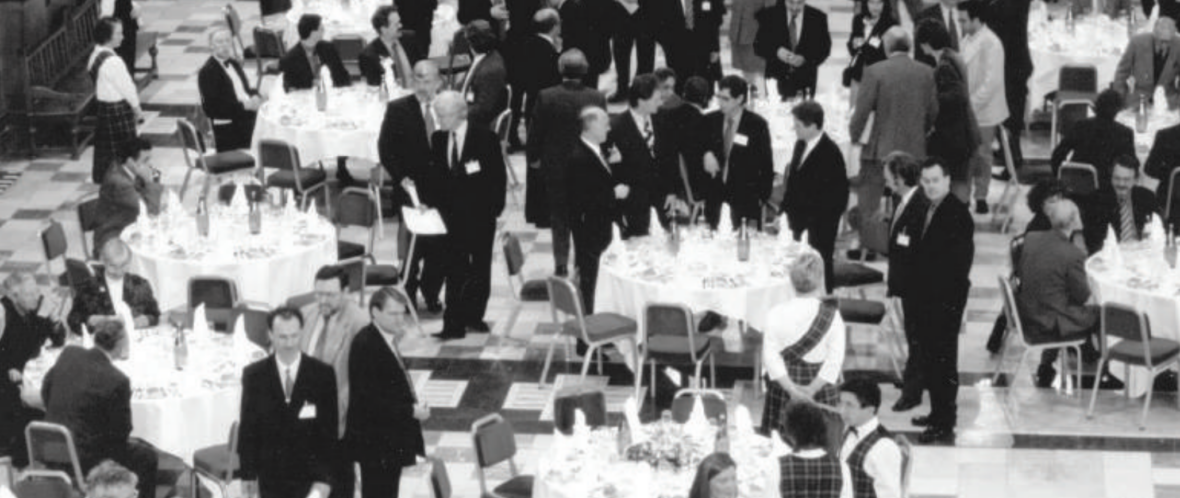
From 10 to 13 April 1996, just days after Strathclyde Regional Council had disappeared, around 230 participants from across Europe came together for the Metropolitan Regions Conference.
They discussed issues that still sound familiar today: sustainable development, transport and land use, urban growth and regeneration, environmental renewal and the governance of metropolitan areas.
But the meeting was designed to lead to something more permanent. An Interim Managing Committee was established in Glasgow and, two months later, representatives met again in Brussels to agree the foundations of the new network. METREX had begun.
Why metropolitan cooperation matters
The circumstances surrounding METREX’s creation were particular to Glasgow and Strathclyde. The question behind them was not.
Across Europe, the places where people actually live their lives increasingly extend beyond the boundaries of individual cities.
A job may be in one municipality and a home in another. A transport decision in an urban centre can affect commuters across an entire region. Housing markets, investment, infrastructure and environmental pressures connect central cities with suburban, peri-urban and rural territories.
Administrative maps matter. But they do not always reflect these connections.
This was one of the ideas behind METREX from the beginning: different metropolitan areas may have different institutions, powers and planning traditions, but they often face challenges that cross the same kinds of boundaries.
Cooperation creates a way to learn from those differences.
It does not mean finding one metropolitan model and applying it everywhere. What works in Glasgow will not necessarily work in Helsinki, Milan or Warsaw. The value lies in comparing approaches, understanding what can be transferred and building knowledge from the experience of different territories.
Over the past thirty years, that principle has remained remarkably consistent.
What has changed is the context around it.
From metropolitan experience to European insight
Europe’s metropolitan areas today are dealing with a wider and increasingly interconnected set of challenges. How people move is linked to where they can afford to live. Climate adaptation is linked to land use and infrastructure. Economic competitiveness depends on skills, accessibility, innovation and quality of life across territories that often extend far beyond a single city.
These are different challenges, but they share a common feature: they are difficult to address within one administrative or policy boundary.
This has also changed what metropolitan cooperation can become. Exchange between practitioners remains important. But when experiences from different metropolitan areas are connected, compared and interpreted together, cooperation begins to turn into collaboration: not only learning from one another, but producing shared knowledge and common positions that no single metropolitan area could develop alone. This provides evidence of how wider European challenges are playing out on the ground, as well as insights into how they can be addressed.
METREX’s role has evolved accordingly. Its mission today is not only to connect metropolitan regions and areas, but to contribute a metropolitan dimension to policies, programmes and projects at European level — bringing together urban and rural territories and the practical experience of those working across them.
In that sense, thirty years of cooperation have created more than a network. They have created a shared body of metropolitan experience.
The opportunity now is to turn that experience into insight that can travel beyond the network itself.
The same question, thirty years later
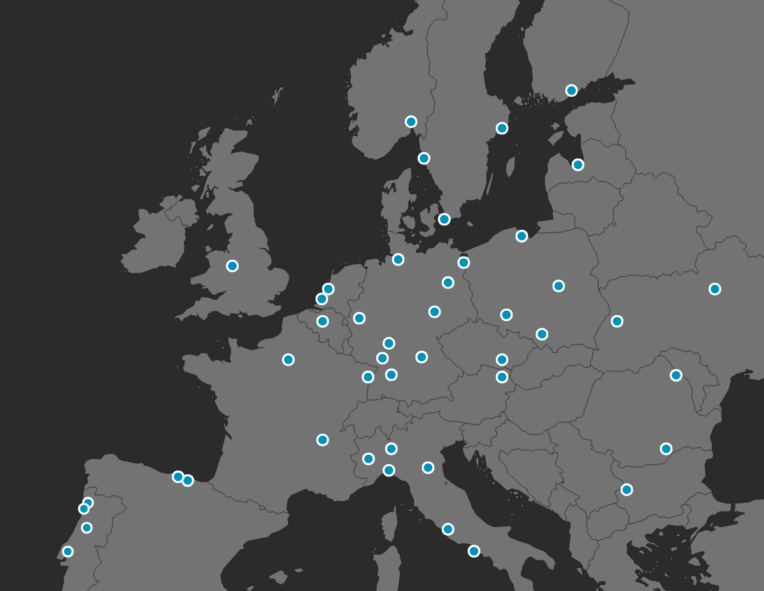
METREX today brings together more than 50 metropolitan regions and areas across Europe. The network is larger than it was in 1996, and the metropolitan agenda has expanded considerably.
But the basic challenge that shaped its creation remains.
Our daily lives cross boundaries more easily than our institutions do.
There is no single solution to that mismatch. Europe’s metropolitan areas have different histories, political systems and forms of governance, and that diversity is part of the value of bringing them together.
What they increasingly share is interdependence.
Recognising that interdependence is the starting point for metropolitan cooperation: understanding where challenges connect, where responsibilities overlap and where working across boundaries can produce better results than working within them.
Thirty years after Glasgow, this is why the metropolitan scale still matters — and why there is still a need for places where metropolitan Europe can exchange experience, challenge assumptions and develop common perspectives.
METREX’s 30th anniversary offers a moment to reflect on those three decades, but also to look beyond them.
This November, the network will meet in Rome for the METREX 30th Anniversary Conference – Connecting Metropolitan Europe. It will bring together metropolitan experiences from across Europe and open a wider conversation about the challenges ahead.
The questions will be different from those discussed in Glasgow in 1996. The need to connect across territories, institutions and boundaries will not.
And that is where the next thirty years of metropolitan cooperation begin.