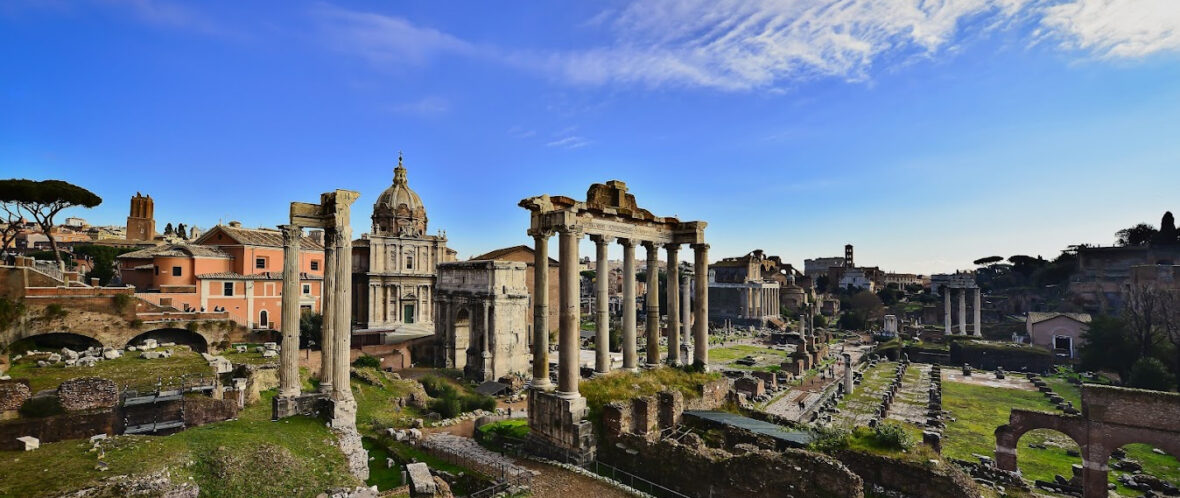
METREX 30th Anniversary Conference
11-13 November 2026 , Metropolitan City of Rome Capital
Connecting Metropolitan Europe: innovative pathways to governing metropolitan territories
Please note that the programme is provisional and may still be subject to changes.
Who governs what falls between our institutions?
From mobility and climate resilience to food systems, housing, territorial intelligence and urban–rural relations, metropolitan authorities are increasingly called upon to address challenges that do not fit neatly within traditional administrative or sectoral boundaries.
This question will provide a common thread throughout the three-day programme, connecting the discussions of METREX Expert and Network Groups, the experience of individual participants, Rome’s metropolitan challenges, and the reflections on METREX’s past and future.
Why Rome, why now?
As METREX celebrates its 30th anniversary, the Rome Conference offers an opportunity to reflect on three decades of metropolitan cooperation while asking a forward-looking question: what role should metropolitan authorities play in governing the transformations reshaping Europe?
Mobility provides an important entry point, but the challenges facing metropolitan areas extend far beyond transport. Climate adaptation, digital transformation, demographic change, territorial competitiveness, housing pressures, food systems, urban–rural relations and expectations around quality of life are increasingly interconnected.
These interdependencies are particularly visible in metropolitan and peri-urban territories, where people, economic activities, services, environmental systems and mobility flows routinely cross administrative and institutional boundaries. Yet policies and governance arrangements often remain organised within separate sectors and jurisdictions.
The Metropolitan City of Rome Capital offers a particularly relevant setting in which to explore this challenge. Through European projects including BIO-INTEL-MOB, PROWD and FOODGaP, and through a portfolio of policy instruments currently being developed or reviewed — including the Metropolitan Strategic Plan, the Sustainable Urban Mobility Plan, the Climate and Energy Strategy, the Metropolitan Agenda for Sustainable Development, and urban–rural and food governance initiatives — Rome is confronting many of these interconnections in practice.
The Conference will therefore place Rome’s questions and policy instruments on the table for peer exchange, collaborative learning and collective reflection.
At the same time, the 30th anniversary allows METREX to turn this practical discussion into a wider political reflection on the role metropolitan authorities should play in the next phase of European territorial development.
One conference, three interconnected outputs
The programme is organised around three complementary strands, running throughout the three days and converging in the closing session on Friday. Together, they give the Conference a political, practical and commemorative dimension.
1. THE ROME DECLARATION
From metropolitan experience to a shared political position
The first strand gives the Conference a collective political purpose.
Starting from the framing question — Who governs what falls between our institutions? — participants will contribute throughout the programme to a concise Rome Declaration on the role of metropolitan authorities in the 2028–2034 National and Regional Partnership Plans.
The Declaration will emerge progressively from the Conference. METREX Expert and Network Groups will each be invited to contribute one key message from their specific perspective, while discussions, the site visit and the Metropolitan Labs will provide practical evidence on where stronger metropolitan coordination is needed and what metropolitan authorities can contribute.
Output:
A one-page METREX political position on the role and recognition of metropolitan authorities in the emerging European governance and funding framework.
2. PEER RECOMMENDATIONS TO THE METROPOLITAN CITY OF ROME CAPITAL
From conference debate to practical metropolitan learning
The second strand translates the conference theme into practical peer learning.
Rather than presenting Rome only as the host or as a case study, the Metropolitan City will invite METREX members and partners to work directly on live metropolitan challenges and policy instruments.
The Thursday Metropolitan Labs will function as structured peer-review sessions, based on a short challenge brief or relevant policy document circulated in advance.
Each Lab will produce a small number of concise and actionable recommendations. These will serve a dual purpose: providing peer perspectives for Rome’s live policy instruments, while also generating practical insights that can inform the broader political discussion leading to the Rome Declaration.
Output:
A concise set of peer recommendations for Rome’s interconnected metropolitan policies and governance instruments.
3. THE ANNIVERSARY RECORD
Thirty years behind us — thirty years ahead
The third strand creates a collective record of METREX at 30.
Rather than concentrating the anniversary in a single ceremony, participants will be invited throughout the Conference to contribute to a collaborative reflection on the Network’s past, present and future.
The anniversary programme will combine memories, visual storytelling and future-oriented reflection. Through short interviews, a member exhibition, postcards and letters to 2056, and a collaborative Futures Wall, participants will look back at how metropolitan regions and METREX have evolved over the past 30 years while imagining the priorities and transformations that should shape the next 30.
Output:
A collective record of METREX at 30 — connecting what the Network has learned since 1996 with the metropolitan Europe it wants to help shape by 2056.
Please note that the programme is provisional and may still be subject to change.
14:00–17:00 — METREX MC Meeting
Venue (tbc)
17:30–18:45 — Site visit: Colosseo–Fori Imperiali Archeostation
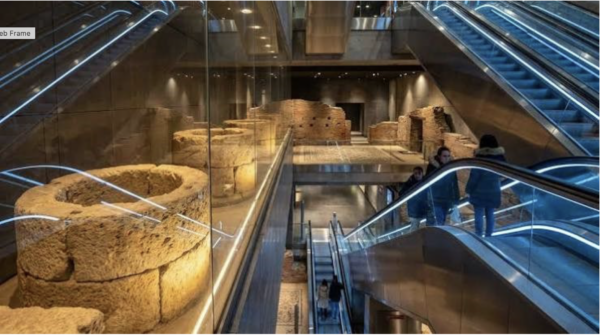
Guided visit to the Colosseo–Fori Imperiali station on Rome Metro Line C, exploring how metropolitan mobility infrastructure integrates archaeological heritage, engineering and architecture.
Meeting point: In front of the external ticket gates of the Colosseo–Fori Imperiali station on Rome Metro Line C, at 17:30.
Transfer via metro
19:00–20:30 — Informal welcome drinks
Drinks at own expense
Please note that the programme is provisional and may still be subject to change.
Participants are offered two options
Option 1 | 9:30-11:00 – Visit to the Metropolitan Urban Center
Venue: Metropolitan Urban Center
Address: Viale Manzoni, 34 (Google maps)
Option 2 | 9:00-12:00 – Nordic Baltic Network group meeting
Venue: Palazzo Valentini
Address:Via Quattro Novembre, 119a (Google maps)
Agenda (tbc)
8:30-9:00 Registration opens
9:00-10:30 NBN work session
10:30-10:45 Coffee break
10:45-12:00 NBN work session
Option 1 | Visit to the Metropolitan Urban Center
Address: Viale Manzoni 34, Roma
09:30–10:00 — Registration and welcome coffee
Late arrivals can register later at Palazzo Valentini as well.
10:00–11:00 — Visit to the Metropolitan Urban Center
The visit to the Urban Center offers an overview of the governance ecosystem that makes metropolitan projects possible. It is a place where urban and metropolitan transformations can be made visible, discussed, and connected. It will allow participants to explore how CmRC and Roma Capitale are working to connect mobility, green and nature planning, food policy, strategic planning and urban-rural governance within a shared metropolitan perspective. The visit will create a common learning experience for all participants, providing a coherent bridge between the conference theme, the European projects and the Metropolitan Policy Labs.
Explore the official website: METROPOLITANO Urban Center Roma
11:00–11:30 — Walking tour in the city centre towards Palazzo Valentini
METREX 30th Anniversary conference start Venue for the afternoon activity: Palazzo Valentini
Address: Via Quattro Novembre 119a, 00187 Roma.
11:30–12:00 — Welcome. Thematic introduction and presentation of the conference structure
Speakers: Rome representatives and Peter Agh, Secretary General of METREX
Speed networking
One question: What is the hardest boundary you have to govern across?
Format: Three rotations of seven minutes.
Starting from the conference framing question, participants (individually or gathered per member organization) are invited to identify the most difficult boundary they face in their daily work.
This will represent the first step in exploring the conference theme through their own metropolitan experience.
12:00–13:00 — Lunch
13:00-13:15 — Keynote speech by Iván Tosics Metropolitan Research Institute, HU
Inspirations from MICAD (Horizon Europe) project, led by Metropolis
Expert and Network Group working meetings
13:15–14:45 — Round 1
Expert Groups are invited to reflect on the conference framing question, discuss its implications from the group’s perspective and identify one key message contributing to the Rome Declaration. Each expert group nominates a rapporteur.
- Metropolitan Climate Challenge EG
- MAPPING METREX
- EconoMETREX 2.0
- Metropolitan governance & strategies
14:45–15:00 — break
15:00–16:30 — Round 2
Expert and Network Groups are invited to reflect on the conference framing question, discuss its implications from the group’s perspective and identify one key message contributing to the Rome Declaration. Each expert group nominates a rapporteur.
- EURODELTA Alliance Network Group
- Sustainable & Affordable Housing EG | Workshop 1
Coordinator: Claudia Murray, University of Reading, UKWho governs housing in the space between our institutions? Two hands-on workshops on what metropolitan authorities can do for housing.
THE LEADING QUESTION: What can a metropolitan perspective do for housing that no single municipality, region or ministry can do alone?
WORKSHOP 1 – MAPPING THE TERRAIN
Who holds which housing levers in your region, and with what capacity? Build a shared map with peers from other regions and spot the problems that no institution owns. Then decide where a metropolitan level adds most value.
- METREX 2049: Foresight EG (3h)
16:30–16:45 — break
16:45–18:15 — Round 3
Expert and Network Groups are invited to reflect on the conference framing question, discuss its implications from the group’s perspective and identify one key message contributing to the Rome Declaration. Each expert group nominates a rapporteur.
- From Roads to Streets
- Spatial Planning for Circular Economy EG
- Sustainable & Affordable Housing EG | Workshop 2
Coordinator: Claudia Murray, University of Reading, UK
Who governs housing in the space between our institutions? Two hands-on workshops on what metropolitan authorities can do for housing.
THE LEADING QUESTION: What can a metropolitan perspective do for housing that no single municipality, region or ministry can do alone?
WORKSHOP 2 – FROM RULES TO REALITY
What happens when a housing policy meets the organisations that must deliver it? Test a real reform from your own region, spot implementation risks early, and agree what metropolitan authorities can do about them.
- METREX 2049: Foresight EG (3h)
18:15–18:30 — Official Opening Ceremony and 30th Anniversary of METREX
Introduction to the conference framing question/30th Anniversary activities.
Pierluigi Sanna, Deputy Mayor, Metropolitan City of Rome Capital (tbc)
Marco Griguolo, METREX President
18:30–19:30 Free time
19:30 Meeting point at the Colosseo MetroStation
Optional transfer to the restaurant via metro (Google maps)
20:00–21:30 — Dinner at Hotel Forum Rooftop restaurant (tbc)
20:00 — Daily summary published
Please note that the programme is provisional and may still be subject to changes.
08:30–09:00 — Registration and welcome coffee
09:00–09:10 — Opening of the day
with Marco Griguolo, METREX President
09:10–10:00 — Anniversary keynote: thirty years of metropolitan Europe, and the next thirty
Chair of the Day: Peter Agh, METREX Secretary General
The Institutional/multilevel-European perspective
with Keynote speaker: Belinda Gottardi, Vice-President of the Congress of Local and Regional Authorities of the Council of Europe
with Keynote speaker (tbc)
10:00–10:45 — A conversation
The reasons for being in METREX: past, present and future
Moderator of the session: Peter Agh, Secretary General of METREX
A panel discussion with:
– Julita Miłosz-Augustowska, Regional Office for Spatial Planning of West Pomeranian Voivodeship, PL
– Ondřej Cmoriak, City of Brno, CZ
– Alastair Wyllie (first Head of Secretariat), UK
– Henk Bouwman (former SG), FR
– Douglas Gordon, EKA, EE
10:45–11:15 — Break
11:15–12:00 — The Rome Perspective – a challenge session
From sectoral policies to integrated metropolitan governance. How the Metropolitan City of Rome Capital is connecting the Metropolitan Strategic Plan, the PUMS, the Climate and Energy Strategy, the Metropolitan Agenda for Sustainable Development, and its urban–rural and food governance instruments.
With
– Representative of the Metropolitan City of Rome Capital
– Prof. Roberto Paolesse, University of Tor Vergata, Rome, Italy
12:00–12:45 — The international perspective: beyond Europe
Moderator of the session: Gianina Panatau, Vice-President of METREX
A panel discussion with:
Carmine Pacente, member of the Committee of the Regions
Aileen Bouclé, Chair of the Executive Directors Council of NARC – National Association of Regional Councils, USA
Representative of AUDI – Arab Urban Development Institute, Saudi Arabia (tbc)
Prof. Zhong Lv, Shanghai Promotion Center for City of Design (SPCCD), China (online)
Marco Griguolo, METREX President, Italy
12:45–13:30 — METREX 30th Anniversary activities
13:30–14:30 — Lunch break
14:30–16:30 — Metropolitan Labs
Parallel working sessions
Each lab works on a real CmRC document or dilemma circulated one week in advance.
Metropolitan Lab 1 — Proximity, accessibility and everyday life: beyond the 15-minute city
On the table: the metropolitan PUMS and accessibility in low-density municipalities.
Anchor project: PROWD
Coordinators: Prof. Mauro Baioni and Prof. Giovanni Caudo (Roma Tre University)
Is mobility always the answer, or should metropolitan policy focus on proximity? What role for local centres and community-based services? How are territorial cohesion, quality of life and climate objectives reconciled? What transfers to other metropolitan areas?
Metropolitan Lab 2 — Metropolitan intelligence for the next generation of governance
On the table: the data and monitoring architecture of the Strategic Plan.
Anchor project: BIO-INTEL-MOB.
How can authorities use data, AI and digital twins in decision-making? What are the risks of data-driven governance? Can technology deliver climate-neutral mobility and better everyday life at once? What territorial intelligence is actually needed?
Metropolitan Lab 3 — Reconnecting Territories: Urban, Peri-Urban and Rural Food systems, territorial resilience and metropolitan governance
On the table: urban–rural and food governance in the Metropolitan Agenda.
Anchor project: FOODGaP
Coordinators: Prof. Davide Marino and Daniela Bernaschi (CURSA – University Consortium for Socio-Economic and Environmental Research), and Francesca Volpe and Andrea Calori (CIHEAM Bari – Mediterranean Agronomic Institute of Bari).
This project offers a very practical example of integrated metropolitan governance, linking urban-rural relations, territorial resilience, stakeholder participation and policy coherence.
How can metropolitan authorities help reconnect territories, actors and policies through the domain of the food systems (implying local supply chains, proximity services, logistics and connectivity)?
16:15–16:45 — Coffee
16:45–18:00 — Harvest plenary and first reading of the Rome Declaration
Rapporteurs from the ten Expert and Network Groups and the three Metropolitan Labs will present the key outcomes of their discussions, highlighting the main messages and proposed contributions to the Rome Declaration.
Book presentation ‘Building Metropolitan Cooperation for Ukraine’s Recovery and EU Future’
With Chuck Bean, former Executive Director of the Metropolitan Washington Council of Governments
18:00–19:30 — Free time
19:30 — 30th Anniversary Dinner
Offered by METREX
20:00 — Daily summary published
Please note that the programme is provisional and may still be subject to changes.
Venue: Palazzo Valentini
The conference closes at 12:30; a farewell lunch is served until 14:00. Please book departures accordingly.
08:45–09:00 — Welcome coffee
09:00–10:00 — METREX General Assembly
Members only
Room: Council Hall.
10:00–10:15 — Coffee break
10:15–11:00 — International panel
Moderator: Marco Griguolo, METREX President
11:00–12:15 — Closing plenary
Handover of the recommendations resulting from the Metropolitan Labs to the Metropolitan City of Rome Capital.
Main learnings from the three days.
Adoption of the (draft) Rome Declaration. Signature by the President and the host; list of signatory regions published the same day and transmitted to the Presidency of the Council, the European Commission, the Committee of the Regions and members’ national administrations.
Announcement of the METREX Spring 2027 conference host.
12:15–12:30 — Closing remarks
12:30–14:00 — Farewell lunch
Room: Sala delle Bandiere.
More info about the programme, moderators, and rapporteurs will follow soon.
On the table: the metropolitan PUMS and accessibility in low-density municipalities.
Anchor project: PROWD
Coordinators: Prof. Mauro Baioni and Prof. Giovanni Caudo (Roma Tre University).
The challenge
Is mobility always the answer, or should metropolitan policy focus on proximity? What role for local centres and community-based services? How are territorial cohesion, quality of life and climate objectives reconciled? What transfers to other metropolitan areas?
About PROWD — Proximity without Density
PROWD investigates how the “15-minute city” can be adapted to low-density urban and peri-urban areas: improving access to services, reducing car dependency and strengthening local communities through participatory planning.
Status: In progress.
More info about the programme, moderators, and rapporteurs will follow soon.
On the table: the data and monitoring architecture of the Strategic Plan
Anchor project: BIO-INTEL-MOB
The challenge
How can authorities use data, AI and digital twins in decision-making? What are the risks of data-driven governance? Can technology deliver climate-neutral mobility and better everyday life at once? What territorial intelligence is actually needed?
About BIO-INTEL-MOB
BIO-INTEL-MOB integrates sustainable mobility and logistics with citizen-centric intelligent solutions. It explores how artificial intelligence, digital twins, mobility data spaces and innovative logistics can support climate-neutral mobility in peri-urban territories, combining technological innovation with participatory governance.
Status: Project starting.
Food Systems, Climate Resilience and the Right to Food through Integrated Metropolitan Governance
Food systems are a critical component of metropolitan resilience. They connect land, water, energy, infrastructure, markets, public services, communities and institutions across territories that extend far beyond municipal boundaries. They also shape people’s ability to access adequate, healthy, safe and affordable food, placing food systems at the intersection of climate resilience, territorial cohesion and social justice.
Climate change is making these interdependencies increasingly visible. Extreme weather events affect agricultural production and supply chains. Growing pressures on land, water and ecosystems reshape relationships between cities and their surrounding territories. Disruptions in transport, logistics and energy systems can rapidly affect food availability, accessibility and affordability. These pressures are not experienced equally. They interact with existing social and territorial inequalities and can increase food insecurity among the most vulnerable communities.
Strengthening metropolitan food systems therefore means addressing resilience and the right to food together. A resilient food system must be able not only to withstand and adapt to environmental, climatic and economic shocks, but also to protect access to adequate food across territories and social groups.
The metropolitan scale provides a particularly relevant space for addressing this challenge. The functional geography of food systems rarely coincides with administrative boundaries. Production areas, wholesale and local markets, distribution networks, logistics hubs, public services and consumers are connected through flows that cross municipalities and link cities to peri-urban and rural territories. At the same time, the policies and institutions shaping these flows are often organised through separate sectors and levels of government.
Metropolitan governance can play a crucial role in reconnecting these fragmented dimensions. It can strengthen relationships between urban demand and peri-urban and rural production, coordinate policies across municipal boundaries, connect public institutions, economic actors and communities, support resilient supply chains and proximity services, and integrate food into wider climate, environmental, territorial and social strategies.
FOODGaP provides a concrete starting point for this discussion. Its focus on local food governance and stakeholder participation highlights the importance of urban-rural linkages, resilient supply chains, sustainable procurement, territorial planning and policy coherence. These dimensions offer an opportunity to explore food systems as a practical field for developing more integrated forms of metropolitan governance.
The Metropolitan Lab will bring together the knowledge and experience of METREX members to explore how metropolitan areas can respond to these interconnected challenges. The diversity of territorial and institutional contexts represented within METREX provides an opportunity to identify common challenges, compare governance approaches and explore how food can connect climate action, environmental protection, territorial resilience and the right to food.
The Lab will focus on three interconnected dimensions.
Reconnecting territories will explore the relationships between urban, peri-urban and rural areas, considering food flows, local and regional supply chains, logistics, proximity services, land and natural resources, and inequalities in access to adequate, healthy and affordable food across metropolitan territories.
Reconnecting actors and governance will examine how metropolitan authorities, municipalities, regional governments, producers, businesses, civil society organisations, research institutions and communities can cooperate more effectively. Particular attention will be given to participation, representation and the capacity of metropolitan governance to create stable spaces for coordination and shared action.
Reconnecting policies will explore how food systems can be integrated into climate, environmental, spatial, economic and social policies. It will consider how metropolitan authorities can overcome sectoral approaches and connect food with climate action, land use, mobility and logistics, public procurement, health, welfare and local economic development.
Together, these three dimensions will support a collective reflection on how metropolitan governance can contribute to food systems that are more resilient, inclusive and territorially connected, while ensuring that the right to adequate food is considered as an integral part of metropolitan resilience.
The Lab will combine exchange between metropolitan areas with a collaborative process aimed at identifying shared challenges, governance opportunities and possible areas for action. Participants will contribute their own territorial and institutional experience, allowing different metropolitan approaches to become a resource for mutual learning and collective problem-solving.
The discussion will lead to a limited number of Metropolitan Food and Resilience Propositions, identifying priority connections to strengthen, governance capacities to develop and areas where metropolitan action can generate environmental, social and territorial benefits.
These propositions will provide a contribution to the Rome Manifesto, connecting the experience of the Lab with the wider discussion on the future of metropolitan governance.
The Lab will also explore the capacities metropolitan authorities need to develop in order to work across food, climate, environment, territorial and social policies. These emerging needs may provide the basis for future cooperation and capacity-building activities within METREX and FOODGaP, including the possible development of a Summer School on integrated metropolitan food governance.
Food systems can therefore become more than an area of metropolitan policy. They can provide a strategic lens for understanding and governing the relationships between territories, communities, resources and institutions in a context of increasing climate, environmental and social uncertainty.
Site visit: Colosseo–Fori Imperiali Archeostation
Tuesday 10 November | 17:30–18:45
Meeting point: In front of the external ticket gates of the Colosseo–Fori Imperiali station on Rome Metro Line C, at 17:30 on Tuesday 10 November.
As part of the METREX Conference, delegates will visit the Colosseo–Fori Imperiali station on Rome Metro Line C, exploring how contemporary mobility infrastructure can integrate archaeological heritage into the transformation of the city.
Located between the Colosseum and the Basilica of Maxentius, the station spans four underground levels and provides an interchange with Line B. The visit will explore the design and engineering solutions used to build a major transport infrastructure within Rome’s complex historical and archaeological layers.
Conceived as an “archeostation”, the project incorporates archaeological artefacts and structures uncovered during excavation into passengers’ daily journey towards the platforms. These include Republican-era wells and remains of a Roman domus.
The visit will offer a first-hand insight into how engineering, archaeology, architecture and heritage preservation come together in a metropolitan mobility project at a site of international significance.
Delegates will be guided by the Councillor for Mobility of Roma Capitale, the Technical Director of Roma Metropolitane, the Director of the Colosseum Archaeological Park and the Director of ATAC. Their contributions will provide institutional, technical, archaeological and operational perspectives on the station’s development and management.
Practical information
Conference venue
Most sessions of the METREX 30th Anniversary Conference will take place at Palazzo Valentini, the historic headquarters of the Metropolitan City of Rome Capital.
Palazzo Valentini
Via Quattro Novembre 119
00187 Rome, Italy
Located near Piazza Venezia, Palazzo Valentini has served as the headquarters of the Metropolitan City of Rome Capital since 1873. Originally commissioned in the 16th century by Cardinal Michele Bonelli, the building stands in the heart of Rome, close to some of the city’s best-known landmarks, including Trajan’s Column, the Imperial Fora, the Vittoriano, the Colosseum and the Trevi Fountain.
Find Palazzo Valentini on Google Maps
Discover more about Palazzo Valentini
Reaching Palazzo Valentini
The nearest Metro stations are Colosseo, on Line B, and Termini, on Line A.
From Colosseo
Palazzo Valentini is approximately a 15-minute walk from Colosseo station. The route follows Via dei Fori Imperiali, passing through the archaeological heart of Rome.
Bus services 51 and 87 also connect the Colosseum area with the venue. Journey times may vary depending on traffic.
From Roma Termini
Palazzo Valentini can be reached in approximately 30 minutes on foot, via Piazza della Repubblica and Via Nazionale.
Alternatively, bus services H, 40, 64 and 170 connect Termini station with the area around Palazzo Valentini. The journey generally takes between 15 and 30 minutes, depending on traffic.
Travelling from Rome Fiumicino Airport
Rome Fiumicino “Leonardo da Vinci” Airport is connected to the city centre by train, bus and taxi.
Leonardo Express
The Leonardo Express offers a direct, non-stop service between Fiumicino Airport and Roma Termini station.
- Departures approximately every 15 minutes
- Journey time: approximately 32 minutes
- Standard fare: €14
Check times and purchase tickets
FL1 regional train
The FL1 regional service connects Fiumicino Airport with several stations across Rome. Please note that it does not stop at Roma Termini.
Services generally run every 15 minutes on weekdays and every 30 minutes at weekends and on public holidays.
Check connections and purchase tickets
Bus
Several coach operators provide connections between Fiumicino Airport and central Rome.
View bus connections from Fiumicino Airport
Taxi
Official taxis are white, display a “TAXI” sign on the roof and carry the relevant municipal identification markings. Taxi ranks are located outside the arrivals areas of Terminals 1 and 3.
Getting around Rome
Rome’s public transport network includes Metro, bus, tram and urban rail services. Tickets for local public transport are not valid for airport train services.
Visitors can choose between single tickets and passes valid for multiple journeys or several days.
View public transport tickets and passes
Accessibility
Rome’s bus fleet is equipped with boarding platforms and designated wheelchair spaces. Accessibility varies across tram and Metro services.
Most Metro stations are accessible to passengers with reduced mobility. On Metro Line A, however, the stations Spagna, Barberini, Repubblica and Vittorio Emanuele do not have lifts or stairlifts providing access to the platforms.
Roma Termini station is accessible, and assistance can be requested for rail journeys. Participants with specific accessibility requirements are encouraged to contact the METREX team before travelling so that appropriate support can be arranged.
Please note that an additional city tax of €7.50 per person per night applies to all accommodation options and is payable directly to the hotel.
Hotel Forum
Overlooking the Imperial Fora in the heart of historic Rome, Hotel Forum offers guests the opportunity to stay within walking distance of some of the city’s most iconic landmarks, including Palazzo Valentini, venue of the METREX Autumn Conference 2026.
Special rate for METREX participants: 10% off the Best Available Rate.
To benefit from the offer, participants should contact the hotel directly by email or phone, quote the booking code “METREX”, and specify their preferred room type.
The discounted rate is subject to availability and confirmation by the hotel.
Contacts
Phone: +39 06 6792446
Email: info@hotelforum.com
Website: www.hotelforum.com
Argentina Residenza Style Hotel
Housed in a former 17th-century monastery on the site of the ancient Theatre of Pompey, the hotel is located in the heart of historic Rome, close to Piazza Navona, the Pantheon and the Roman Forum. Palazzo Valentini, the conference venue, is approximately a 10-minute walk away.
Special rates for the stay from 10 to 13 November 2026:
- Standard Room in a Separate Building: €510 total. The room is located 70 metres from the main building; access to the lift requires climbing a flight of 10 steps.
- Comfort Room: €570 total.
Breakfast included. Free cancellation up to 72 hours before arrival.
To benefit from these rates, guests should indicate when booking that they are attending the METREX Autumn Conference 2026.
Contacts
Phone: +39 06 68809533
Email: info@argentinastylehotel.com
Website: www.argentinastylehotel.com
Hotel Traiano
Set in the heart of historic Rome, opposite the Markets of Trajan and just a short walk from Piazza Venezia, the Roman Forum and the Colosseum, Hotel Traiano offers accommodation in a prime central location. Palazzo Valentini is only a 3-minute walk away.
Special rate for METREX participants: an additional 10% discount on the Best Available Rate published on the hotel’s website.
To benefit from the discount, use the booking code “4LSPECIAL”.
Contacts
Phone: +39 06 6783862
Email: hoteltraiano@4lcollection.com
Website: www.hoteltraiano.it
Hotel Bolivar
Set in a historic 19th-century building in the heart of Rome, Hotel Bolivar enjoys a quiet yet central location between Piazza Venezia and the Colosseum. Palazzo Valentini, the conference venue, is approximately a 5-minute walk away.
A preferential rate of €140 per night for a Double Room for Single Use (DUS), including breakfast, has been reserved for conference participants, subject to availability.
To benefit from the special rate, participants should book directly with the hotel by email, mentioning the METREX Autumn Conference 2026.
Contacts
Phone: +39 06 6791614
Email: info@bolivarhotel.com
Website: www.bolivarhotel.eu